John Stuart Mill

“The only freedom which deserves the name, is that of pursuing our own good in our own way, so long as we do not attempt to deprive others of theirs, or impede their efforts to obtain it.”

– John Stuart Mill, On Liberty
Introduction:
Image source: NPR

Born in England in 1806, John Stuart Mill combined eighteenth-century Enlightenment thinking with nineteenth-century Romanticism and history to contribute to social theory, political theory, political economy, ethics, and rationalism (Macleod, 2016). Mill was considered a radical, free-thinking philosopher focusing on topics such as liberty, women’s rights and utilitarianism. His most notable works include System of Logic (1843), On Liberty (1859), Utilitarianism (1861) and An Examination of Sir William Hamilton’s Philosophy (1865).

John Stuart was groomed into a “mere reasoning machine” (Mill, 1909) through his father James Mill, and his father’s friend, Jeremy Bentham who was known for his utilitarian ideas in law (MacIntyre, 1998, O’Donnell, 2022).  However, at the age of 20, Mill suffered from severe depression. He realized that, if society implemented changes that he, his father, and Bentham were working towards, then Mill would feel no happiness.

From his mental crisis, Mill learned two things:

  • Asking, whether you are happy, will cause you to no longer be happy.
  • Stressing right thinking and good behavior is not enough; one must also feel the full range of emotions (Mill, 1909) which are topics society faces now.

Notably from On Liberty, Mill was a proponent for unrestrained freedom of speech and thought in fear of democracy replacing the will of individuals with the will of the majority – a current issue the United States faces now (Mill, 1986).

While many philosophers are well versed, Mill has longstanding impacts on English and political philosophy which are relevant to academia today.

History of John Stuart Mill: The Prodigy, the Breakdown, and the quest for Happiness

The eldest son of nine children, Mill was born on May 20, 1806, in his father’s house in Pentonville, London. James Mill, John Stuart Mill’s father, was a historian, economist, and philosopher, and at one point even wanted to become a preacher, however, James Mill lost his faith in God. Due to the social structures at the time, James Mill was too educated for ordinary people and too poor for the aristocracy (Larsen, 2018). An interesting note from John Stuart is that he did not love either of his parents – there was respect but no affection (Larsen, 2018).

Because of James Mill’s quest for knowledge, he trained John Stuart Mill in the art of critical thinking. John Stuart (who will further be referred to as Mill) grew up in a rigorous household, in which by the age of seven, was reading Plato in Greek, and, by eight, studied Latin. As mentioned earlier, Jeremy Bentham was also essential to Mill’s education. Bentham imparted ideas of utilitarianism, free trade, representative government, and the greatest happiness of the greatest number of people to Mill as he was made into a “Benthamite” (Marx, 2022). Accompanying his father on morning walks, Mill recounted that he was never allowed to simply memorize content, but, instead, to understand the purpose of education to develop the best reasoning and argumentation skills.

In 1820, Mill was sent to live with Sir Samuel Bentham, Jeremy Bentham’s brother, in Paris, France. Two years later, Mill returned home and started at the East India Company as a clerk where his father was chief. While Mill was working, Jeremy Bentham entrusted him to do the supplementary annotation of Bentham’s “Rationale of Judicial Evidence” containing Mill’s first publicly acknowledged literary work (John Stuart, 1875). He did not regard his childhood as unhappy, but, from his Autobiography, it is clear he had few acquaintances, fewer friends and no familiarities as Mill suffered from the lack of natural, unforced development.

Due to his upbringing, he had a nervous breakdown of severe depression where only poetry soothed his soul. Mill adored his father in his own way and struggled to disagree with James Mill. Recognizing the value of feelings, Mill in a sense rejected his father’s lack of regard for emotions. Thus began Mill’s exploration of Romantic writers where feelings were emphasized as a source of truth (John Stuart Mill, 2023).

In 1830, Mill met his companion Harriet Taylor, and, in 1851, married her. Taylor provided constant support by assisting him in writing and editing his books. Working together on their On Liberty book, Taylor, unfortunately, passed in 1858 before the publication. Mill proceeded to publish the pamphlet-length work without further revision the following year, dedicating it to her. Taylor is cited as being the inspiration for Mill to be involved with women’s rights as he was a firm believer in individuality and preserving autonomy.

Mill was still interested in politics as he stood as a parliamentary candidate for Westminster in 1865. He took an active part in debates before the passage of the 1867 Reform Bill and ensured the prevention of corrupt practices (Anschutz, 2023).

Mill died in 1873 in France, and his Autobiography and Three Essays on Religion (1874) were published posthumously.

Key philosophical contributions

Morality as social rules

Although Mill believed in utilitarianism, he postulates morality creates social rules where “morally wrong or morally right” is contingent on a speaker’s ability to use those phrases. Mill believes, that, even though people may have differing views on what is moral, people can uphold a general consensus of what is morally wrong if it involves formal punishment, public disapproval, or through an internal bad conscious.

Based on this, Mill is a proponent of morals being a social practice and not an autonomous, self-determination like Kant tneds to position himself towards. It is understandable to think that one’s moral code is driven by the moral code of society. For example, someone could write a book that changes the lives of millions, but may write the book not because they individually feel obliged to write it, but because they feel morally to do so to benefit society in general.

Logic/Arguments

Mill was a proponent of inductive thinking because facts could only become “facts” through verification in observation which then can be applied to a broader circumstance. At the time, some philosophers thought truth could be uncovered through intuition or lived experiences. Mill proposed intuition could be a slippery slope as he considered intuition akin to inherent prejudice, which, in turn, led to incorrect beliefs or harmful institutions. Because A System of Logic was Mill’s first, major published work, this was the first appearance of Mill’s radical philosophy. Over the next 30 years, Mill continued to defend his philosophy to account for criticisms through eight edition revisions.

Politics/Economics

Much like A System of Logic, Mill’s stance in The Principles of Political Economy was an attempt to open new discourse with utilitarian foundations. Mill was not a fan of people trampling each other to get ahead as a standard, so his solution was partially supportive of the laissez-faire system because it was feasible. Though, he was not always consistent in supporting the laissez-faire system as he later moved to a mixed economy.

An interesting point, which aligns with utilitarianism, is Mill thought the ideal economic state is where no one is poor, wants to be richer and no one’s happiness is at the cost of someone else’s suffering. Thus, it is understandable Mill is the father of the No-Harm principle stating people should be free to do what they want unless they cause harm to someone else. It sounds similar to the “do unto others as you would have them done unto you,” but in a practical manner that is realistic to society.

Free speech

Because Mill, like many philosophers, debates how truth is determined, he forwards the discussion of allowing freedom of speech as it enables people to understand truths about the world as implied in On Liberty. Mill is a little extreme in this thought as he suggests full freedom of speech should be allowed, including propaganda as any form of censorship silences expression and truth. Grounded in reality, Mill was not agreeing with other philosophers in that truth will defeat any false claims. Instead, he thought censorship was worse than human nature to be biased or fallible against truth. Encouraging a “marketplace of ideas” creates an opportunity for individuals to flourish.

As such, Mill recognizes there are only three possibilities with freedom of speech:

  1. “You are wrong,” and freedom of speech allows people to correct the information stated.
  2. “You are partially correct,” and freedom of speech is necessary to argue viewpoints to come to an understanding of what truth is.
  3. “You are 100% correct,” and freedom of speech is needed to ensure one truly understands what they believe is true.

Feminism

Mill sought justice and equality for women because of his stance on notions of equality, justice and liberty and, with those qualities, equality would make people happier. In the essay The Subjection of Women, Mill said inequality is inherently wrong and a hindrance to human improvement. Women should be allowed to participate in society, politics, education and professions independently from their male counterparts. As a reoccurring theme, Mill was in favor of maintaining individuality, so it is not a complete surprise he would apply that to both males and females.

Considered progressive thinking, Mill even presented a petition to the House of Commons for a bill in favor of women’s suffrage prior as it introduced the opportunity for equal voting rights. While women’s suffrage did not occur until 1928, he advanced a conversation outside of the societal norm/ status quo for the time. Harriett Taylor also influenced Mill by teaching him the consequences of women’s legal insubordination.

Individuals and the larger society – the intellectual and rational approach

On an individual and personal level for Mill, he sought a quest for happiness after his bought of depression led to his development of the qualitative distinction between “lower” and “higher” pleasures (MacIntyre). Higher pleasures are thought of as the ideal pleasure because they consist of learning new things or helping others. Meanwhile, the lower pleasure is the simplicities of life such as indulgences like eating and drinking. It is worth mentioning, the notion of pleasures is like happiness as both are simple concepts referring to a broad range of feelings and ideas that lost meaning through common use in language.

Mill’s approach to happiness is an interesting concept as happiness is the absence of pain and a byproduct of intended pleasure. Also known as hedonism, Mill argued pleasure is the only factor contributing to one’s well-being. If one’s happiness is good to an individual, then the general happiness is good to the aggregate of all people. Although Mill’s proof for happiness contains some faults, a positivist approach could argue this aligns with a ripple effect where one person’s happiness can lead to societal happiness. In opposition, if someone’s happiness harms another, then it does not lead to the overall happiness of people like thievery/murder/etc.

Perhaps his crisis of happiness also was obtained through the liberty of free expression and thought (MacIntyre). On Liberty addressed the point that individuals should be allowed to do as they please if it is not to harm someone else. As such, Mill struggled to rationalize the balance between a quantitative (Enlightenment) approach and with qualitative (Romantic) approach. Mill was firm in being a rational individual to pursue happiness within oneself as that may lead to a happier society.

However, with his utilitarian foundations, Mill understood happiness for the community at large meant practicing a specific goal for action to better public welfare because one person cannot determine which course of action will lead to the greatest good. To tie all his points together, Mill did think it was important to consider how actions can benefit the community, but also on a personal level of benefit for an individual.

Utilizing Mill in the 21st Century

Mill was an interesting philosopher as he often is referred to as utilitarian as he exhibits the harm principle, but he also exhibits his own individuality away from the ideals that define a utilitarian. Through his multiple publications, Mill opens thoughtful discourse about political theory, liberty and speech.

While some rhetoricians interpret Mill’s position on rhetoric as unbounded and inapplicable to today’s media environment with the internet, others suggest applying the harm principle to the liberties of speech was Mill’s intention. Even though Mill is for individualism, he also is for not harming others as he moved towards a mixed/somewhat socialist perspective. Therefore, there is solid standing in Mill would be for free speech to establish and determine truth unless it harms another or the greater society.

With the era of charged rhetoric in the 21st century, applying restrictions on the First Amendment would make sense as there are already restrictions like NYTimes v. Sullivan in terms of one can say what they want unless it was intentional, actual malice is established or creates public panic (like shouting fire in a movie theater when there is no fire). As such, Mill’s no harm principle with rhetoric would address possible solutions concerning the internet/social media, politics and public figures/leaders. In a time where truth is convoluted and uncertain, Mill may suggest freedom of speech is necessary to uncover the real truth, but also it cannot be at the expense of harming society’s decision-making process.

Although Mill thought censorship would be worse than expressing one’s truth, it appears that may only be feasible on a micro level. As a political theorist too, he would provide insight into the macro level of rhetoric where people cannot just say anything either. Other scholars argue Mill’s perspective on speech should be ignored because they take his opinions as definitive, but Mill was a radical philosopher so it would not be outside his realm either to combine multiple perspectives to guide society to improvement. When combining his thoughts on all his philosophical contributions, this idea of Mill’s possible stance on current-day rhetoric provides a bigger picture of what he did to move the body of knowledge further and a deeper understanding of his complex ideas.

Some may think Mill is hyper-focused in philosophical discussions, with no relevant impacts on society now, however, it is dismissive for someone who, while he claimed to be a simple person, was quite complicated and multifaceted.

In a more democratic or liberty-focused topic, Mill does have a voice of reason in that power should not be a method of suppression at the expense of people’s individual liberties. However, like other topics mentioned, this is not a black-and-white approach where no one is harmed, or everyone is harmed because that is unrealistic. Instead, Mill brings forth the notion of inward reflection to try to move society to a place where equality can operate within the structures of power, at least when applied to the U.S.

Bibliography:

Anschutz, R. (2023, February 23). Public life and writing of John Stuart Mill. Encyclopædia

Britannica. Retrieved from https://www.britannica.com/biography/John-Stuart-Mill/Public-life-and-writing

Capaldi, N. (2004). John Stuart Mill : A biography. Cambridge University Press.

John Stuart Mill and individual liberty. Constitutional Rights Foundation. (n.d.). Retrieved from https://www.crf-usa.org/bill-of-rights-in-action/bria-24-4-john-stuart-mill-and-individual-liberty.html

John Stuart Mill : His life and works / Twelve sketches by Herbert Spencer, Henry Fawcett, Frederic Harrison, and other distinguished authors. (1875). New York : Henry Holt and company.

Larsen, T. (2018). John Stuart Mill : A Secular Life. OUP Oxford.

MacIntyre, A. (1998). A Short history of ethics: A history of moral philosophy from the homeric age to the twentieth century. Notre Dame, IN: University of Notre Dame Press.

Macleod, C. (2016, August 25). John Stuart Mill. Stanford Encyclopedia of Philosophy. Retrieved from https://plato.stanford.edu/entries/mill/#Life

Marx, P. (2022). John Stuart Mill. Salem Press Biographical Encyclopedia.

Mill, J. S. (1909). Autobiography. New York, NY: P.F. Collier & Son.

Mill, J. S. (1986). On Liberty. Prometheus Books.

O’Donnell, J. H., III. (2022). Jeremy Bentham. Salem Press Biographical Encyclopedia.
JRL459 Project 2

Fork, knife and food truck: Going beyond a restaurant on wheels

– said Anthony Pierce, owner of Rollie Pollie Egg Roll Factory
– said Alexis Holland, owner of Whistle Punk Farms
– said Jordan Robarge, owner of Revival Chili, Revial Pasta and brick-and-mortar diner Nancy’s Revival
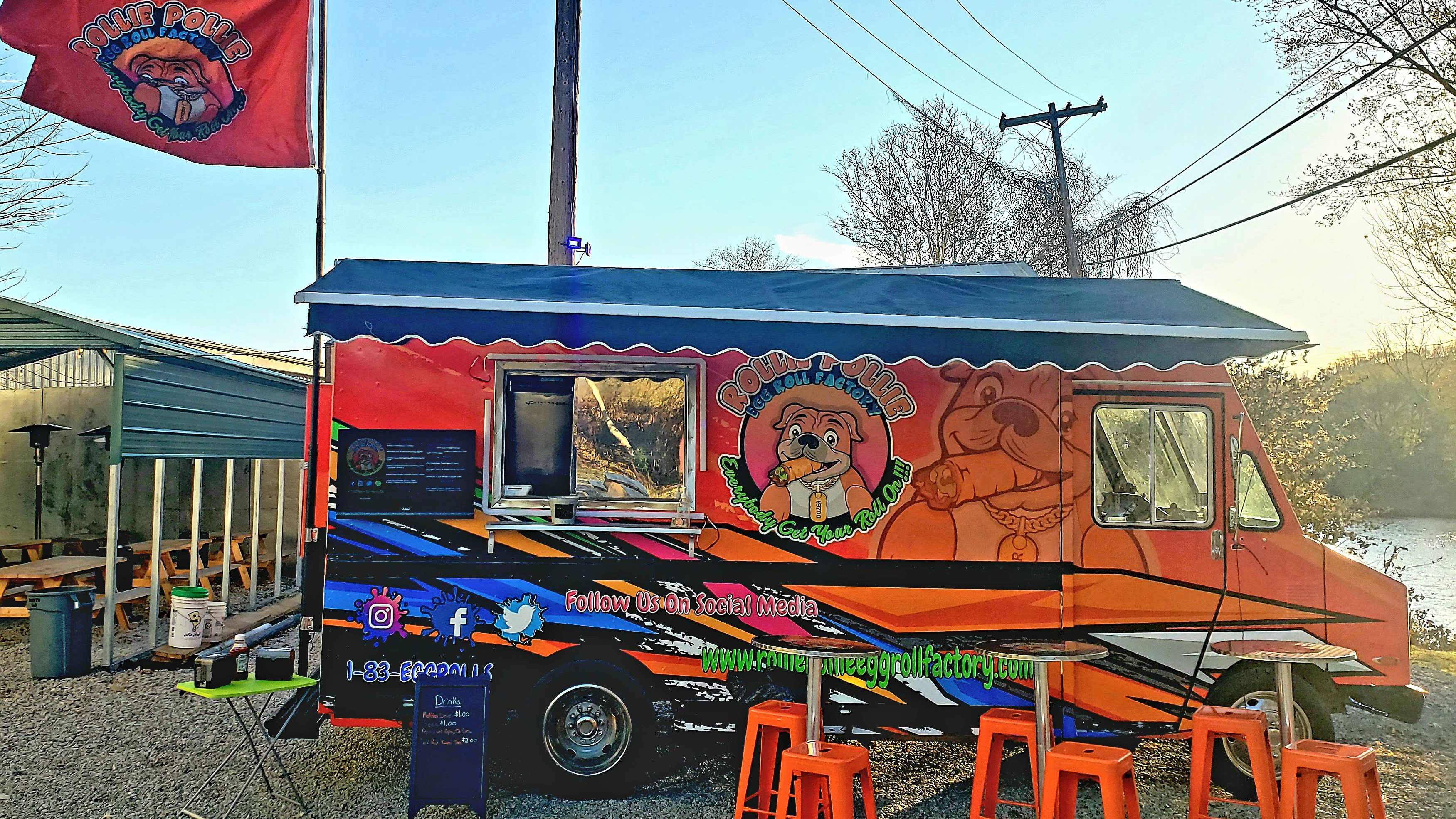
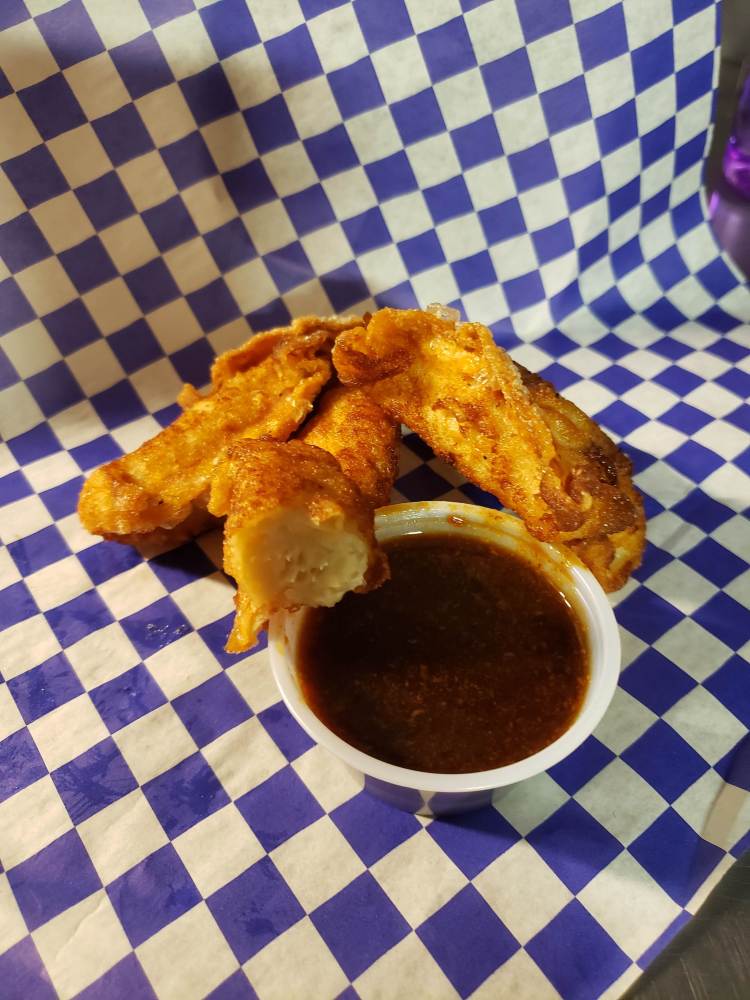
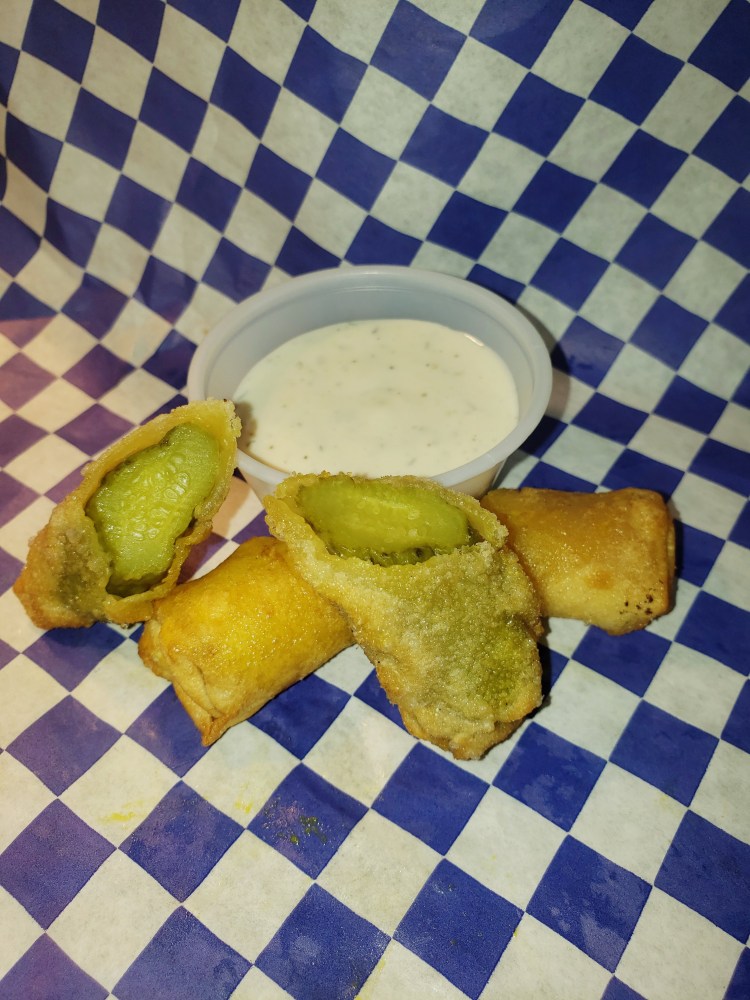
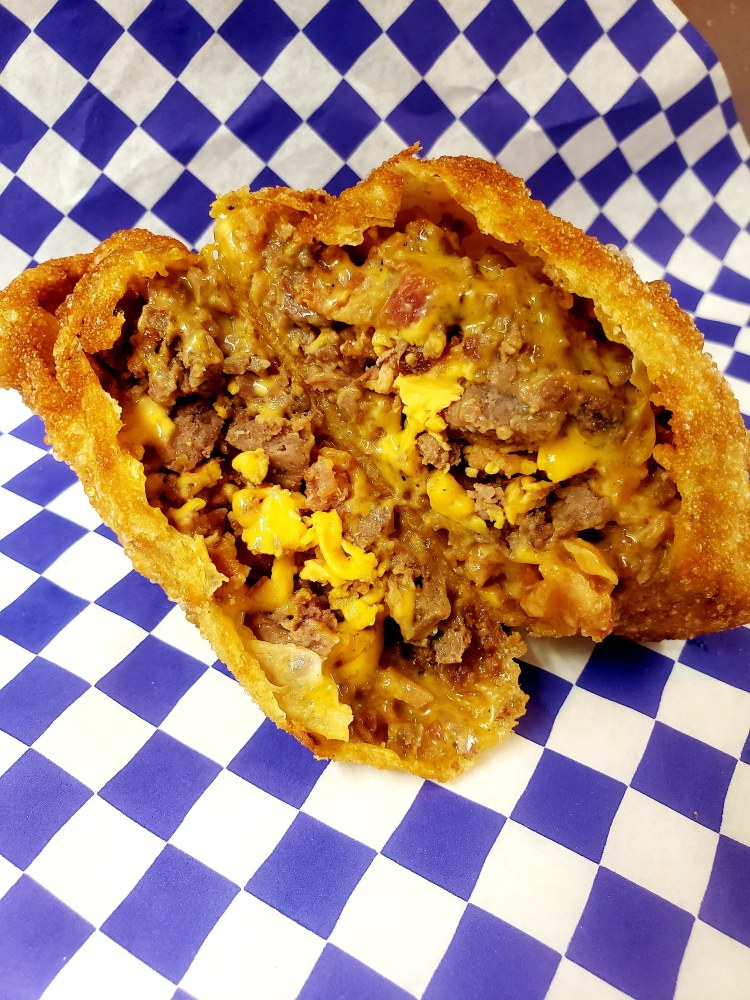
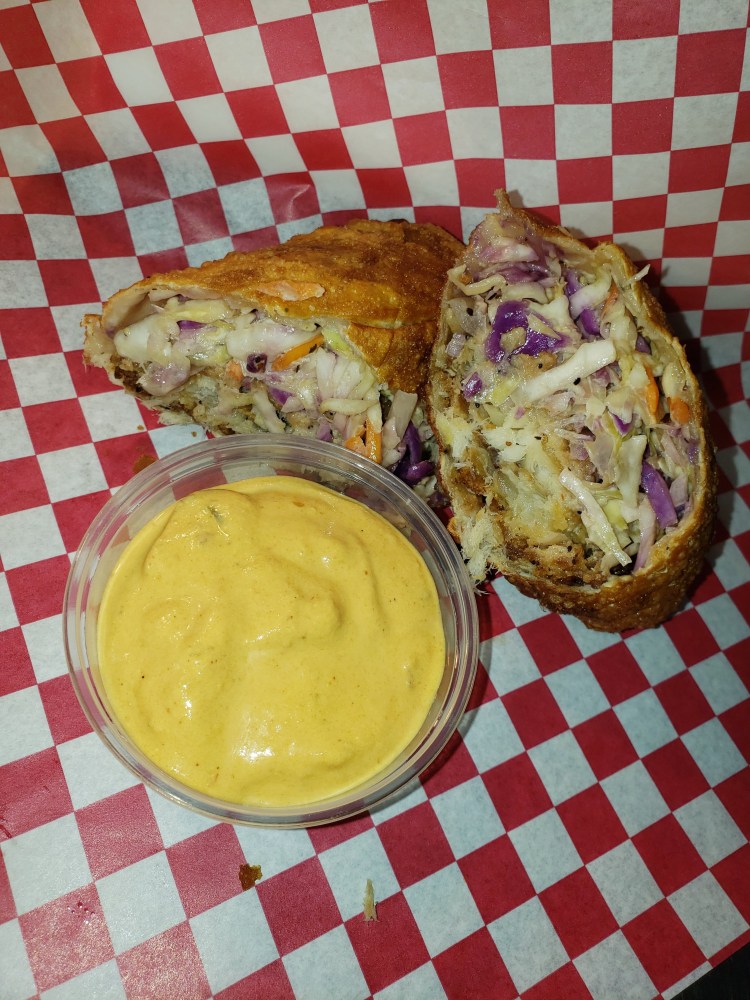
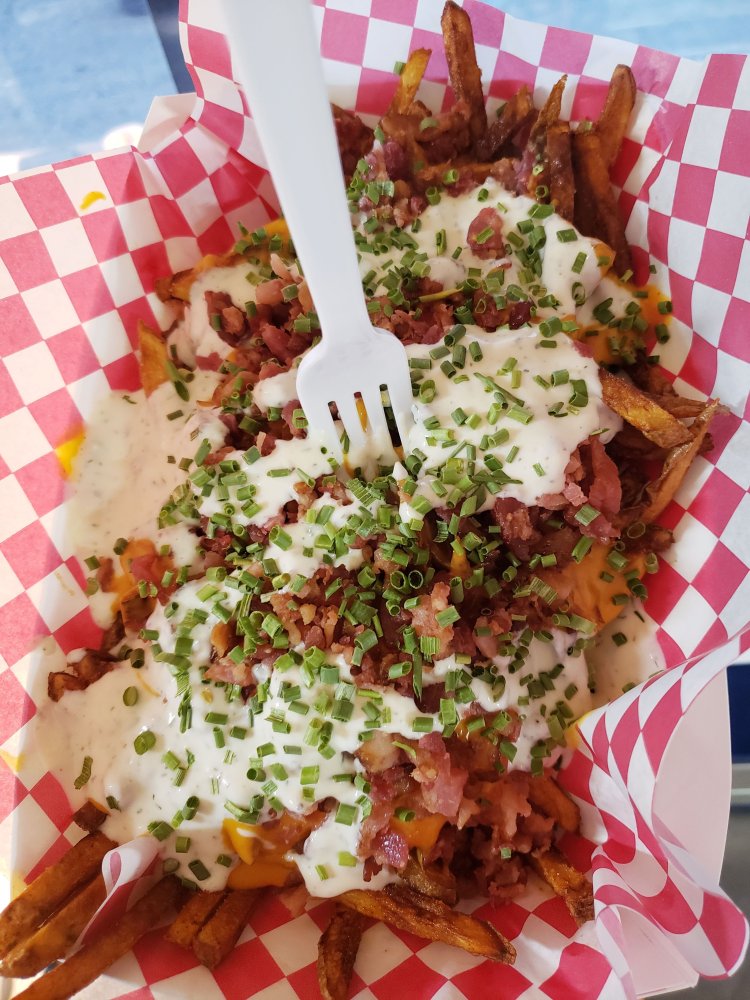
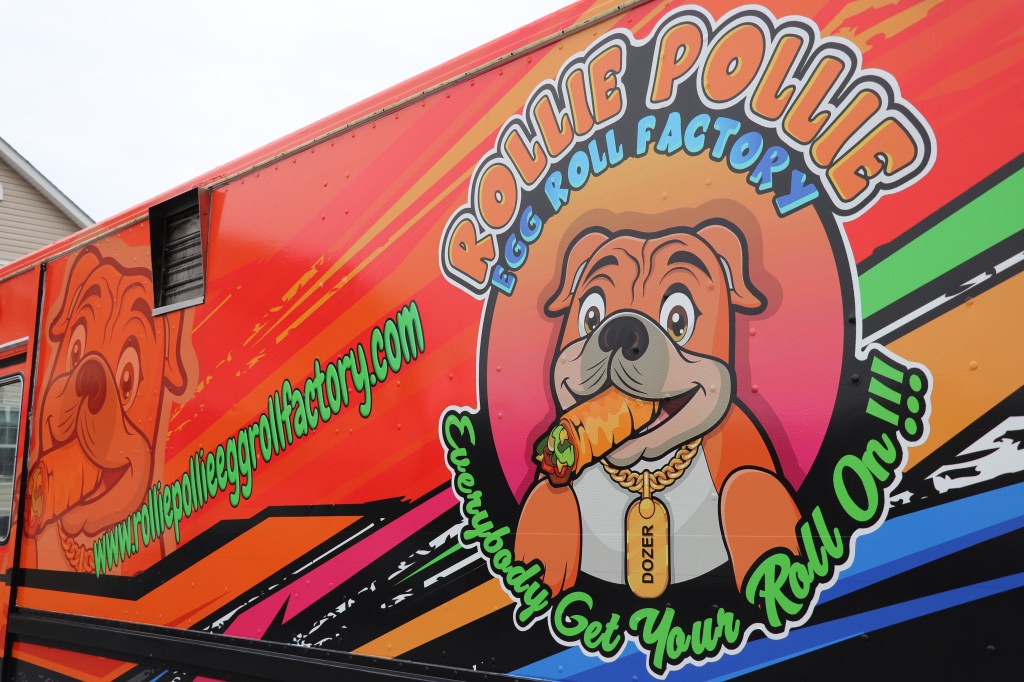
From chicken, bacon and ranch to pierogi-style, Rollie Pollie Egg Roll Factory offers not-so-typical egg rolls in Morgantown, West Virginia.

Not many people would say the global pandemic is a blessing in disguise, but for Anthony Pierce, the pandemic helped him fall back in love with his passion – cooking. With an Italian grandmother and Polish grandfather, Pierce grew up surrounded by love in the form of Sunday Philly gravy (an Italian red sauce referred to as gravy typically served with pasta) and stuffed cabbage rolls.

Although he is not formally trained, Pierce started as a line cook and eventually made his way up to an executive chef for multiple restaurants. After several years in the food industry, Pierce lost his passion for cooking and started his own construction business.

“I swore to my now-wife, that I would never get back into food as a living,” Pierce said. “And then the pandemic hit.”

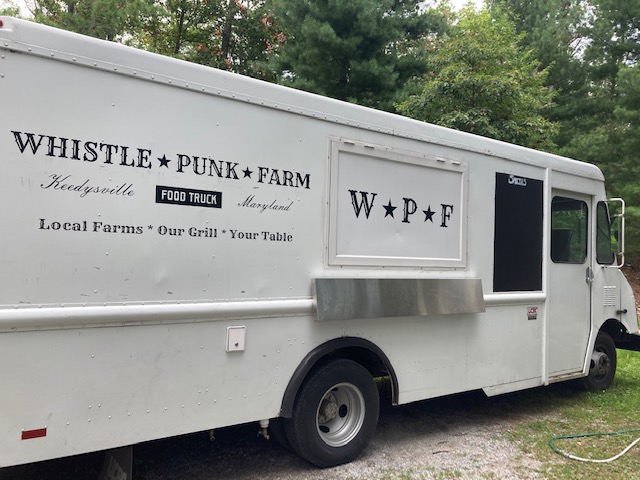
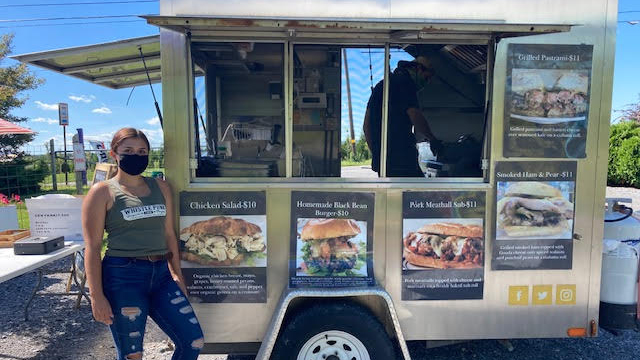
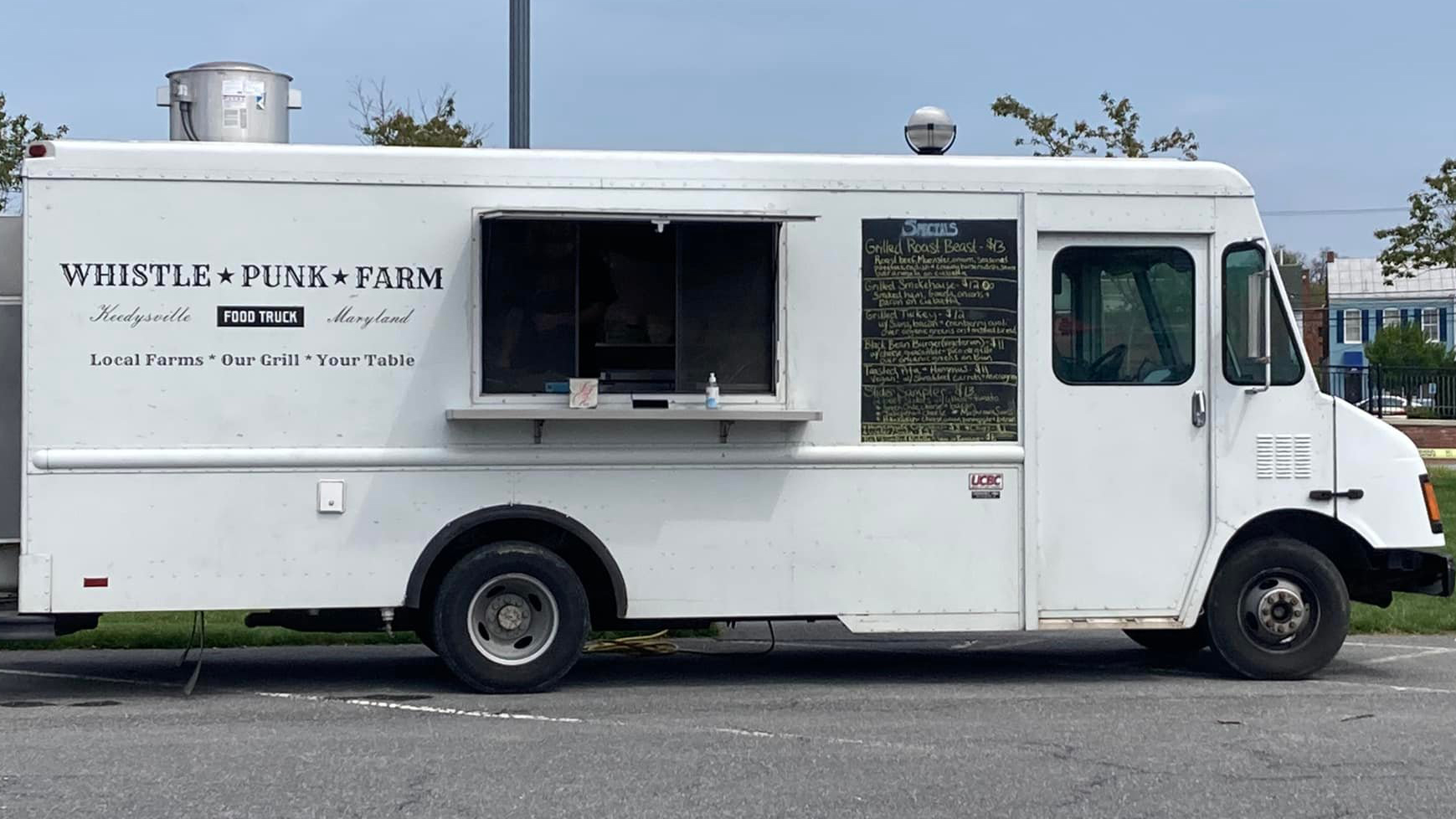
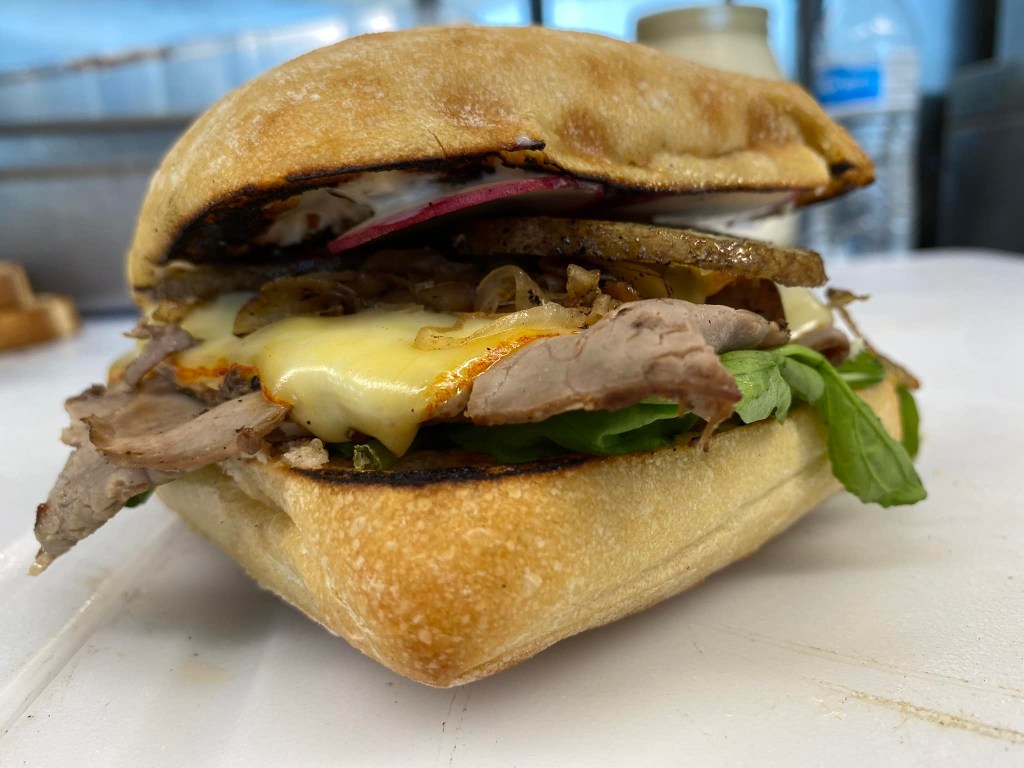
Whistle Punk Farm food truck brings farm-fresh ingredients straight to customers in Hagerstown, Maryland.

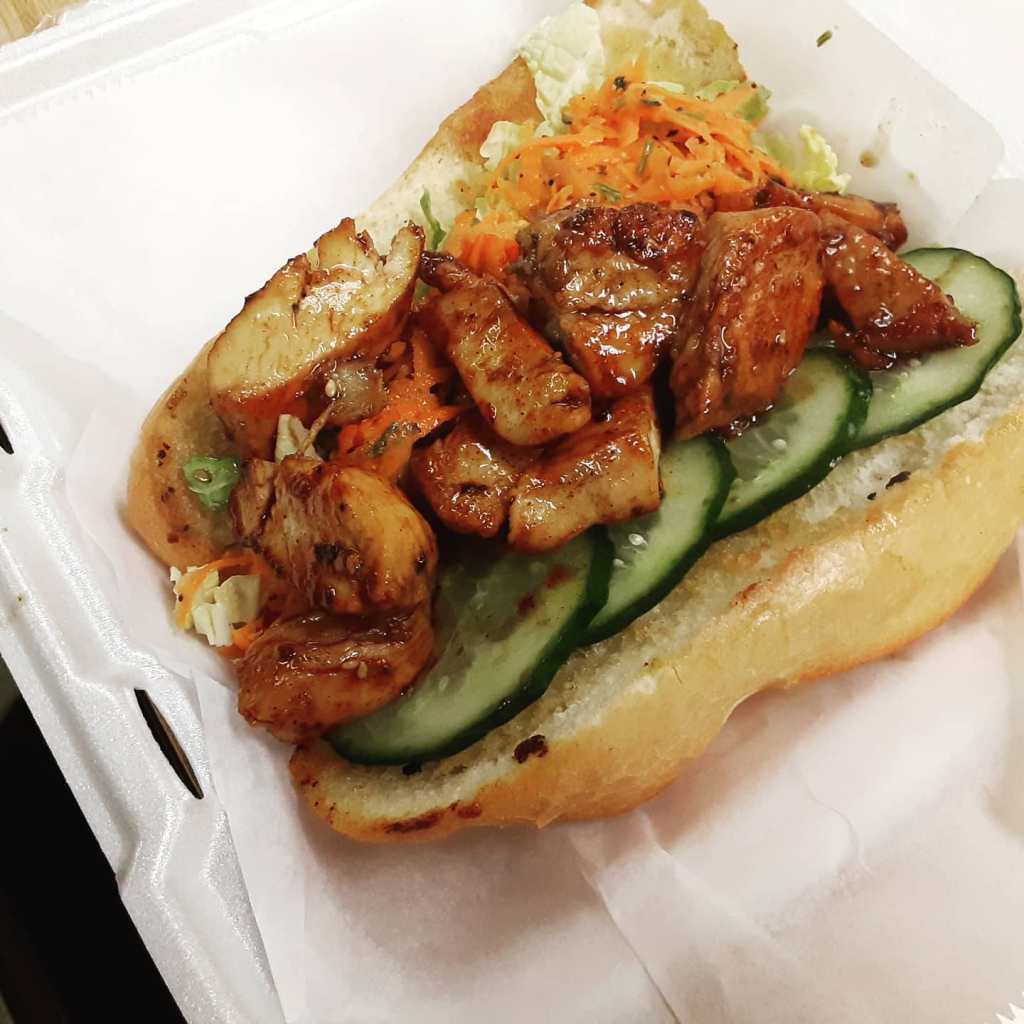
Like Pierce, Alexis Holland worked in the food industry when she was younger, but didn’t see it as a career until she owned her own farm and eventually started a food truck in 2019. With a unique concept of a fully seasonal menu dependent on local farms of the area, Holland takes the idea of farm to table on wheels.

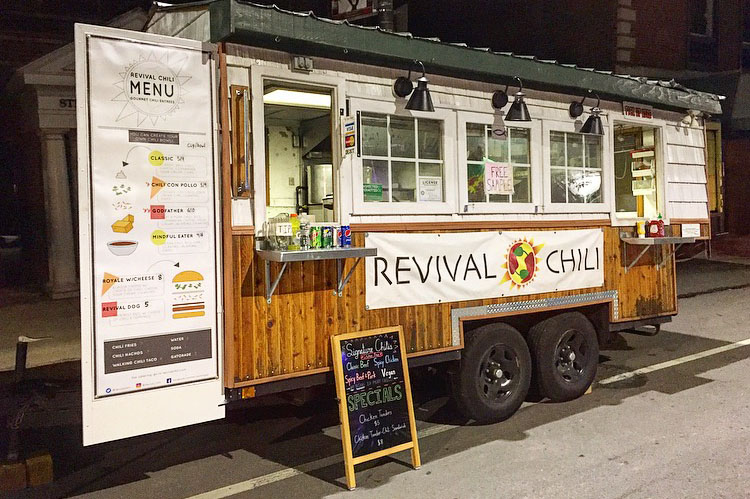
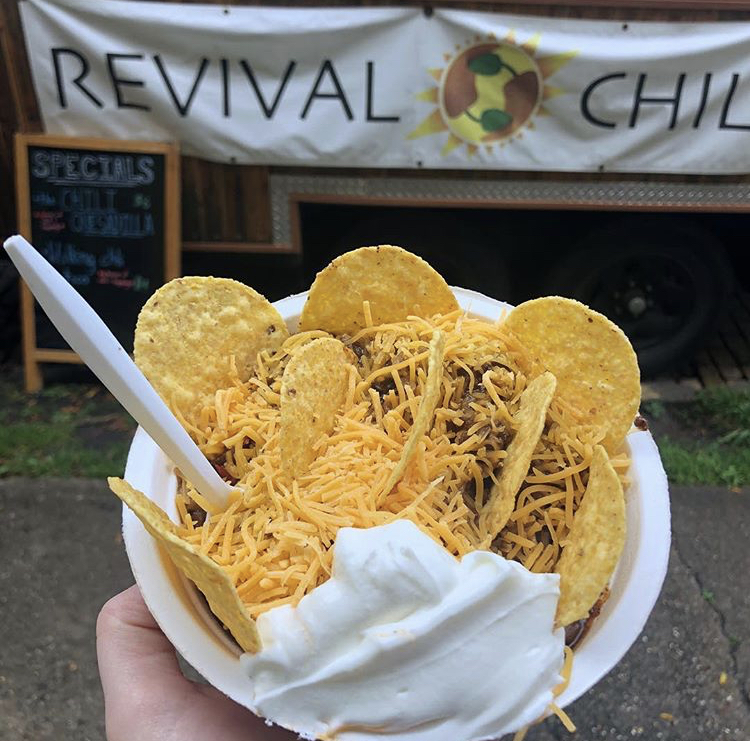
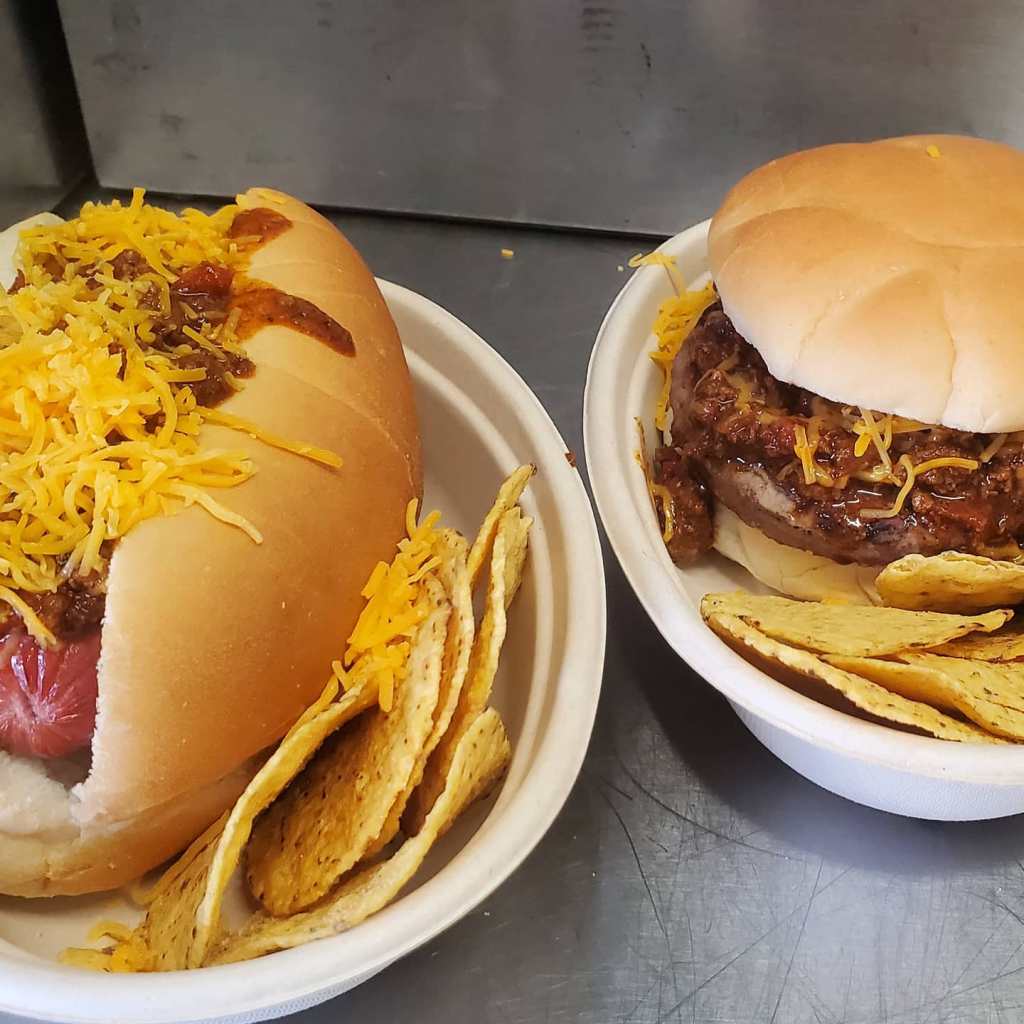
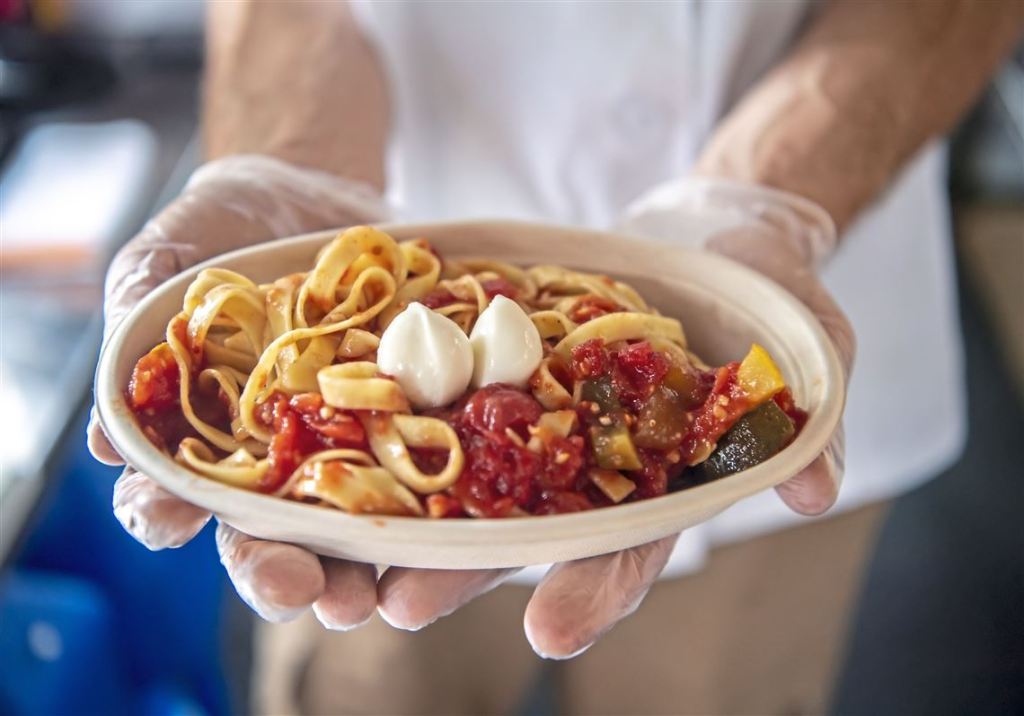
Chili, pasta, oh my! Revival offers two food trucks that offer chili and pasta and a family-oriented diner called Nancy’s Revival in Pittsburgh, Pennsylvania.

Jordan Robarge, meanwhile, took a different approach to the food industry. He graduated from the University of Virginia with a major in systems engineering and minors in math and business. While in college, Robarge received an underage drinking charge, affecting his ability to get his dream job after college. That’s when he knew the chili recipe he developed for his fraternity could be put to better use: starting a food truck business called Chili Revival that focused on an open hiring model where anyone can apply for a job no matter what happened in the past.

Growing in popularity due to the COVID-19 pandemic, food trucks provided people a slice of normalcy to eat and safely talk with others. From 2016 to 2020, food trucks have an average annualized growth rate of 12.1% with an estimated 30,000 businesses in the U.S according to Zippia.

With low start-up costs compared to opening a brick-and-mortar restaurant, food trucks are an alternative way for people to start their own business, offering a quick, fast-paced environment with quality food. Rollie Pollie Egg Roll Factory, Whistle Punk Farm, and Revival Chili are non-traditional food trucks aiming not only to serve mouthwatering food, but to also better their local communities.  

Rollie Pollie Egg Roll
Factory:
A niche, not a novelty

MORGANTOWN, WEST VIRGINIA – “Everybody knows there’s this pandemic of heroin use and fentanyl going on, but I don’t think people really speak about it enough,” Pierce said.

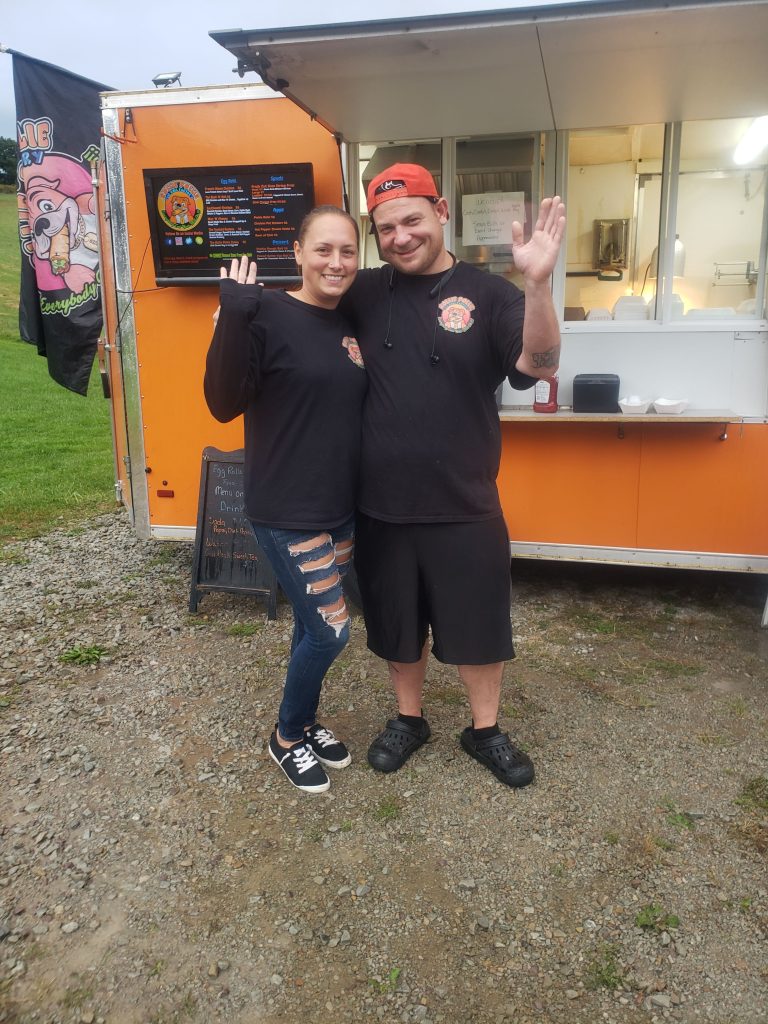
Anthony and Megan Pierce, owners of Rollie Pollie Egg Roll Factory, at their original food trailer.

Seven years ago, Pierce fell into a rough place with drugs and alcohol. He went through rehab. He attended a halfway house for recovery. He wanted to help others. After recovering, Pierce became a drug and alcohol counselor, and, with his wife Megan, ran four sober-living houses in the Uniontown area with about 36 men and women in the houses.

“When the pandemic hit, it’s not a good time when someone’s in recovery from drugs and alcohol,” Pierce said. “Some with one or two months of being clean and sober – when you start losing jobs, you’re basically locked up and you can’t do anything – that’s a really dangerous time for somebody in recovery.”

Pierce said once he experimented with egg roll fillings, he started thinking about a food truck business for the Morgantown community. Through extensive planning, his background in both food and owning his own construction business, Pierce and his wife started with a small trailer, and recently upgraded to a full-size food truck.

Rollie Pollie Egg Roll Factory’s old trailer compared to their new, full-size trailer.

“Even though we put (different fillings) in an eggroll, it’s like when you bite into it, you want that nostalgic flavor to take you back somewhere,” Pierce said. “It’s the taste you’re comfortable with and used to just wrapped up in a different package.”

With a horn in his tailor that plays “Country Roads,” Pierce said food trucks are a social gathering for people and it goes beyond a restaurant on wheels as he and his wife try to make it an experience for the customers to create lasting memories.  

“For us, creating a sense of putting ourselves into that culture, hopefully, people can look back at us and remember getting eggrolls,” Pierce said. “Food is art. I can immediately give you something that is 100% me and 100% my love wrapped up in that eggroll. What better way to make a connection with somebody than through food.”

Even with working long hours, managing his schedule for events a year out, preparing and creating all the egg rolls from scratch, Pierce said the most rewarding part of running a food truck is customer satisfaction.

“Everything going out that window is part of us. I’m so blessed to be able to do this every day,” Pierce said. “Even though it’s more work than you can ever imagine, you take pride in it when you’re giving it out. It’s not just my business, every time we go out, it’s everybody’s. It’s Morgantown’s food truck, I just run it.”

Revival Chili, Pasta
and Nancy’s Revival:
A platform for creativity

PITTSBURGH, PENNSYLVANIA – “The name revival came from helping revive people’s lives. I knew I wanted to hire returning citizens and, from the get-go, I wanted to be able to put some training around entrepreneurship as well as helping them leverage the skills that put them in jail in the first place,” Robarge said.

After facing rejection from companies when applying for jobs after college, Robarge realized the largest hindrance to his success was his background check. With an estimated 70 million people having criminal records in the U.S. according to Pew Trusts, Robarge identifies with his employees’ struggles, using his businesses to not only help their short-term goals but also long-term success.

“With my love of chili and my story of how something as little as an underage drinking charge affected my life, I knew that there were large problems within the prison system in the U.S., so I started Revival Chili in 2016,” Robarge said.

Robarge could not make this dream happen on his own, so he applied for the Venture for America Fellowship, a national organization focused on supporting rising entrepreneurs in urban areas. Robarge was accepted and matched with Thrill Mill (now known as Ascender), a company dedicated to helping entrepreneurs start and build their businesses.  

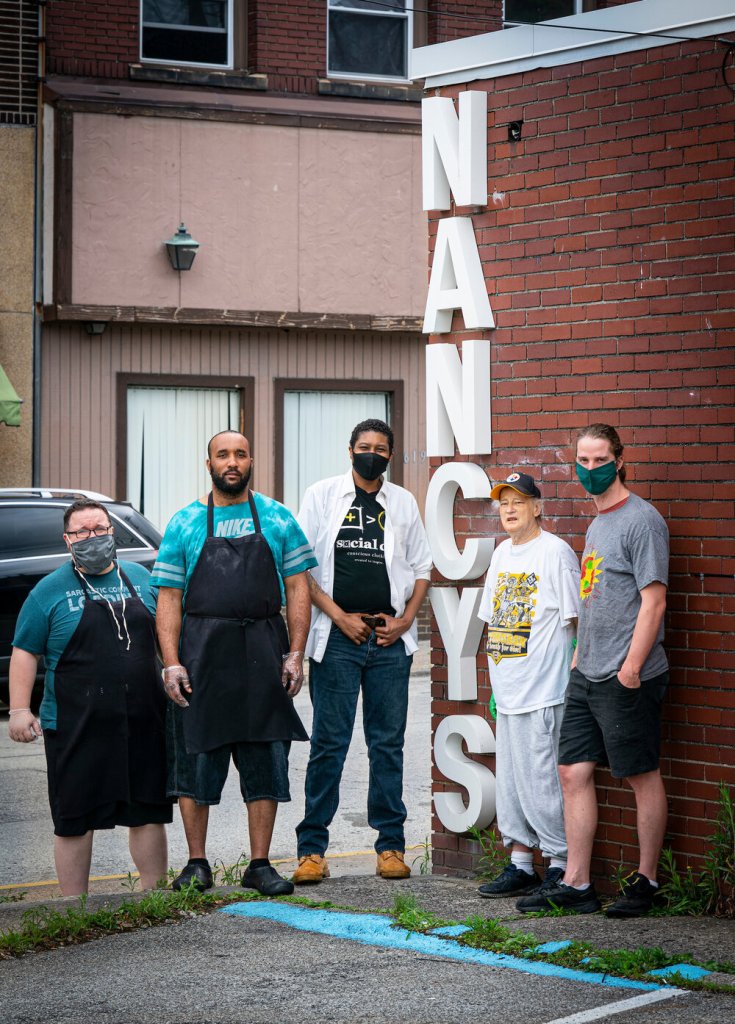
Robarge and his staff at Nancy’s Revival, located in the east end of Pittsburgh.

Through Venture for America along with the support of his parents, Robarge quickly found success in his business but realized he wanted to help more disadvantaged people and provide more job opportunities. The solution? Purchasing Nancy’s diner in a lower-income east neighborhood of Pittsburgh to provide more jobs and room for entrepreneurial classes.

“In the summer of 2019, we started running life skills classes for our employees that were also opened to the community once every two weeks and covered a variety of things focusing on both the emotional intelligence and more technical skills like opening a savings account,” Robarge said.

Running three businesses, Robarge said he enjoys the times he can take out one of the food trucks and interact with customers, but equally loves the numbers side of balancing his profit and loss statements. Through his businesses, Robarge hopes to inspire his current employees to believe they can start their businesses by providing a space for them to use their creativity.

Whistle Punk Farm:
Farm to food truck

HAGERSTOWN, MARYLAND – “When we bought the farm, we started out with chickens,” Holland said. “Anytime I see people that are looking for chickens, I let them know that chickens are the ‘gateway drug’ for farming. Once you get chickens, you’ll have goats, or you’ll have pigs, or rabbits, or whatever it is shortly after chickens.”

Growing up in rural, western Maryland, Holland was surrounded by “more cows than people.” At a young age, she loved animals, even volunteering to help nearby farms with cleaning in hopes of being able to ride horses. Once her mom passed and her dad’s health started declining, Holland moved from New Mexico back to Maryland and purchased her first farm.

After getting involved with the local farmer’s markets and doing food demonstrations, Holland came up with Whistle Punk’s food concept of being “farm to fork,” a solely seasonal menu based on what’s available with fresh meats and produce.

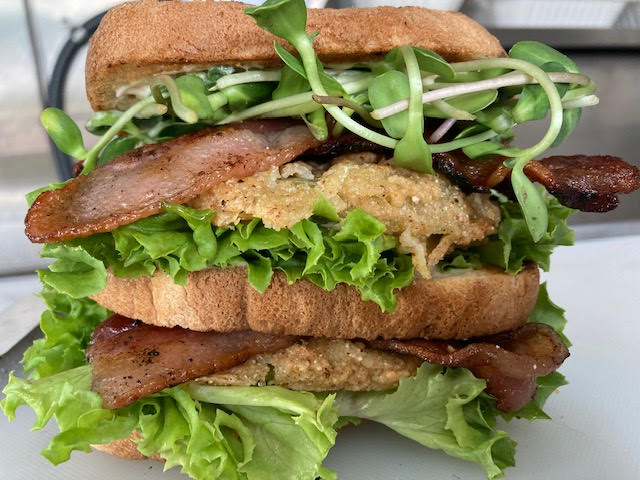
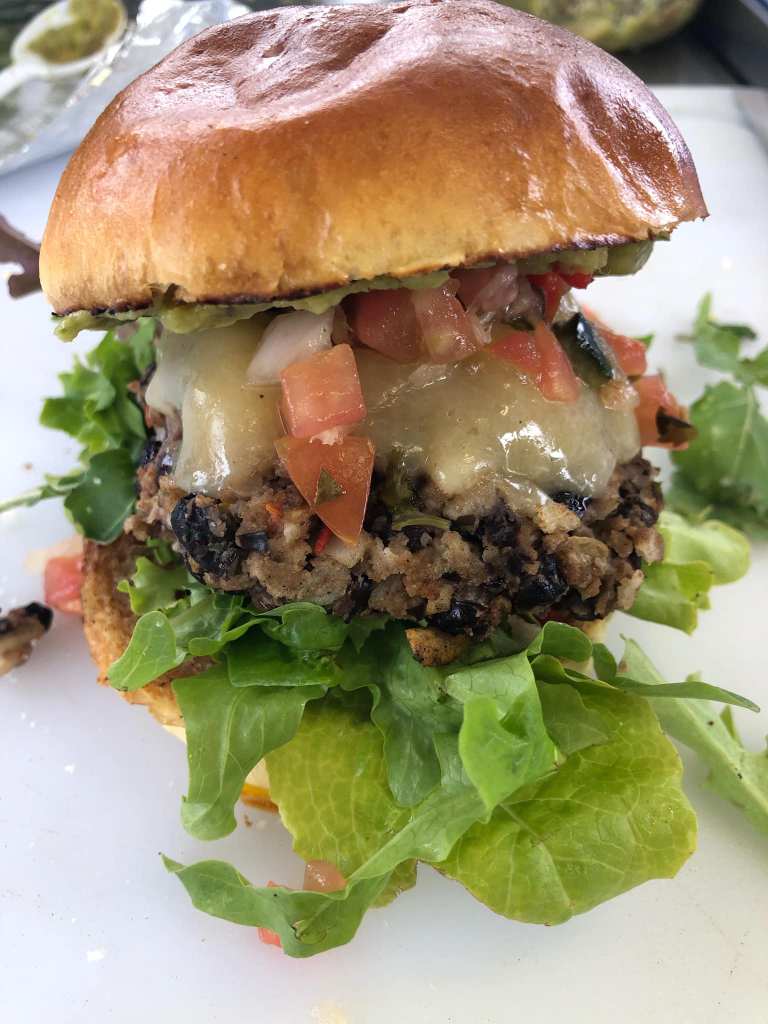
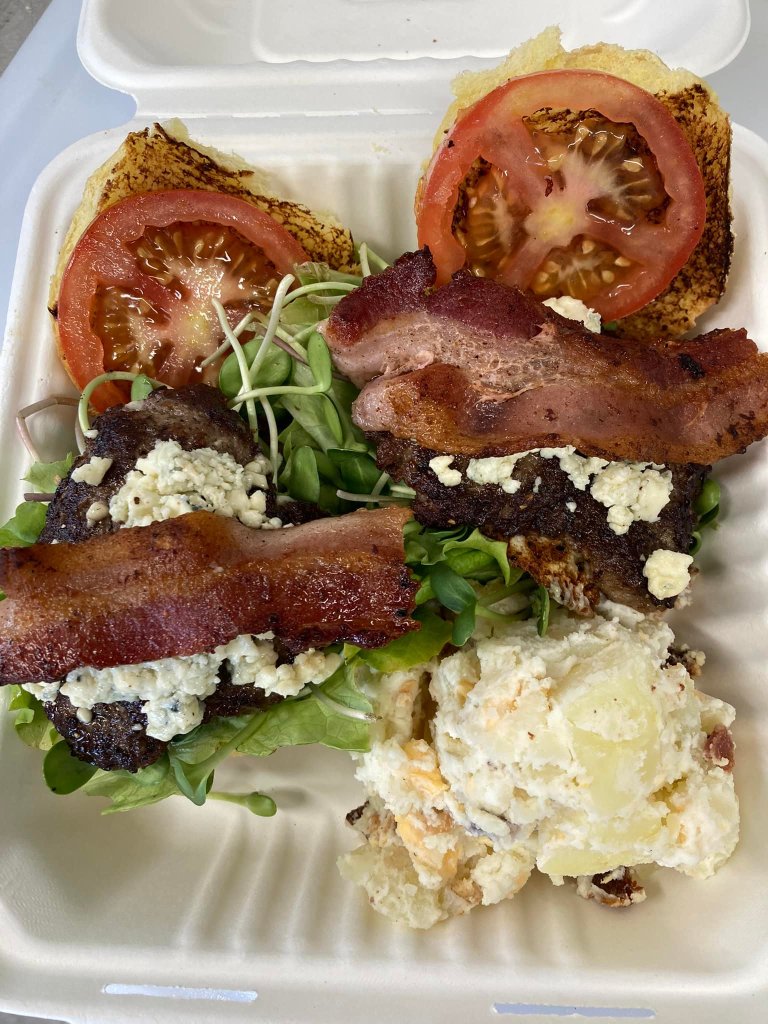
Whistle Punk Farm’s fried green tomato club with Holland’s farm heritage bacon, homemade cajun mayonnaise with organic lettuce and sunflower microgreens.

“I think food has always been one of those things to bring people together,” Holland said. “What we are striving for is just to have people have a deeper connection to the people in their community who produce the food. It’s not just having us hand you a handcrafted sandwich, but it’s having you also understand those ingredients were produced by people in your community.”

Much like her food concept, when it came to naming the food truck, Holland said it was more difficult to name the truck than name her children. Wanting something bold, different and memorable, Holland was searching through her grandfather’s thesaurus and stumbled upon “whistle punk,” a term given to a person operating the steam donkey (a piece of early lumberjack equipment used to communicate to other lumberjacks with steam-powered whistles; like Morse code but with whistles).

Although Holland initially thought starting a food truck right before the pandemic would be devastating, Whistle Punk Farm thrived during the pandemic, offering porch drop-offs and going to neighborhoods with community parks for safe social distancing. Within the first year, Holland was able to sell the smaller trailer she started with and move to a full-size trailer that she built herself. With an established customer base, Holland said owning a personal business is worth it when she sees customers’ reactions.

“You’ve got to be a little crazy to work in a food truck,” Holland said. “You’re not doing it because the environment is comfortable. You do it because you have a passion for what you’re doing, you love seeing the people, and you love working with the food. One of our favorite things is we get so much love from our customers. It makes our hearts smile and gives us the energy to keep going.”

Going beyond just a restaurant on wheels, these food trucks are essential to bringing people in the community together, one bite at a time.

“I’m always coming up with something new and I can always give that back to the customer,” Pierce said. “A food truck is an experience if you let it be that. We wanted to take that food truck and make it be that. I can go out and make $2,000 in a day, but for me, it’s a part of me to you and that’s what makes it special. I’d rather make $100 a day and make it special than rack my pockets and it means nothing.”

The Asian experience in Appalachia

According to NBC News, anti-Asian hate crimes increased by 339% last year compared to the year before in New York, San Francisco, Los Angeles and other cities. Due to the label “China Virus,” the Asian community is highlighted in the media, but what is not emphasized is the experience the community faces. As the COVID-19 pandemic is, affecting millions of people worldwide, Jade Ruggieri of West Virginia University explores how hate affects the Asian community of Appalachia.

Bon appétit: the Wacky Food Trends of the 2010s

Sushi donuts. A new diet. Maybe an occasional late night watching food videos on social media. Food brings people together and touches the soul. It’s hard to remember what you ate for dinner last night, let alone the biggest food trends of the past decade. The avocado toast and whipped coffee from TikTok you start your morning off might feel habitual at this point, but let’s take a look at some of the strangest foods people loved.


Rainbow/Unicorn Food

Colorful donuts, cereal, and everything else you can name, has taken over grocery stores everywhere. Due to its rising fame from social media platforms like Instagram, rainbow food is especially appealing to social media for the “phone eats first” moments. The Bagel Store, located in Brooklyn, New York, pioneered the first rainbow donut topped with rainbow-sprinkled cream cheese.

(https://www.thedailymeal.com/eat/biggest-craziest-food-trends-2010s)

2. Avocado Toast

Avocado Toast (6 Easy Recipes!) - Jessica Gavin
https://www.jessicagavin.com/avocado-toast/

From pickled onions to an over easy egg, avocado toast surged in popularity due to its versatility. Not only can it be for breakfast, brunch, or even a snack, but there’s also plenty of health benefits as avocados contain healthy mono and polyunsaturated fat content and antioxidants like beta carotene. Something about the creamy, rich avocado’s ability to pair well with a wide variety of toppings when mixed with the crunchy toast underneath keeps people replicating the meal at home.

(https://food52.com/blog/24876-top-food-trends-2010s)

3. Sushi Burrito

Image
https://twitter.com/Sushirrito/status/1134587581272797184/photo/1

It’s sushi. It’s a burrito. It’s a “sushiritto.” Combing beloved sushi in the larger shape of a burrito, many people love it or hate it. On one hand, the larger form is perfect for sushi connoisseur. On the other hand, others say it’s too much food and ruins the elegance of what sushi is supposed to be. Typically, these special burritos are assembled just like sushi rolls with proteins and other fillings in the middle, followed by a layer of rice, and wrapped tightly with sheets of nori. Creator and owner of Sushiritto in San Francisco, Peter Yan, said he came up with the idea when he wondered why there weren’t more options than a typical soup, salad, or sandwich.

What would happen if you made a really large sushi roll, operationalized it for speed, and also modernized it by infusing Latin flavors?” – Peter Yan

https://www.themanual.com/food-and-drink/sushi-burrito-sushiritto/

(https://www.thedailymeal.com/eat/biggest-craziest-food-trends-2010s/slide-26)

4. Açaí Bowl (smoothie bowls)

Originating from Brazil, Açaí bowls, or Acai for the Americanized spelling, are an antioxidant superfood with the açaí berry – a berry originating from South and Central America that tastes like a mix of wild berries and chocolate – being the frontrunner of the bowl. The bowl’s consistency is thicker than a smoothie, and is often topped with various fresh fruits, granola, or healthy seeds like chia seeds. An appealing aspect of these bowls is they are customizable based off a person’s preference. The average Acai Bowl is filled with antioxidants, vitamins, minerals, fiber, protein, and healthy fats, making it people’s go-to breakfast that’s healthy and filling.

(https://www.chelseasmessyapron.com/acai-bowl/)

5. Alcoholic Seltzers

Best hard seltzers and canned cocktails of summer 2020

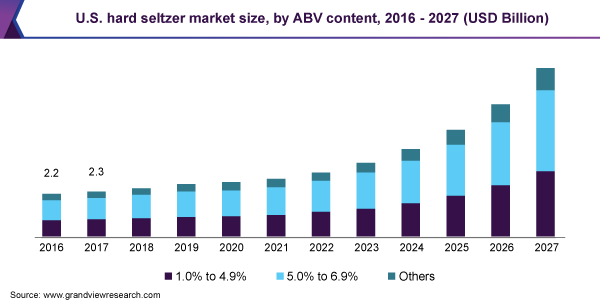
Currently at a $550 million business, hard seltzers rose in popularity due to its inexpensive price, low calories, and has an average alcohol content of 4-6%. Not only does the drink appeal in taste, it also has a strong market appeal to younger adults. For example, sayings like, “Ain’t no laws when you’re drinking Claws,” are synonymous with the power-house brand White Claw. Also, hard seltzers have an added appeal of being relatively “healthy” as they have a relatively low ABV and little or no additional sugar allows most versions to remain in the 100-calorie range.

(https://www.vox.com/the-goods/2019/8/20/20812814/white-claw-truly-hard-seltzer-explained)

Hard Seltzer Market Size & Share | Industry Report, 2020-2027
This shows the growth of hard seltzers over the years and the anticipated consumption for future years.

6. Whipped Coffee (Dalogna Coffee)

Dalgona Whipped Coffee Recipe- 4 Ingredient Whipped Coffee

Although countries around the world debate over where this frothy, whipped coffee originated from, it rose in popularity from Korean YouTubers where of an actor trying the whipped coffee in Macau. Then, during the COVID-19 pandemic, the coffee rose to popularity due to the social media platform TikTok. Whipped coffee is made by whisking equal parts coffee, sugar and hot water until it transforms from a loose liquid to stiff peaks like whipped cream. The whipped coffee is often mixed with some type of milk or milk substitute for a sweet, velvety and airy morning drink.

(https://www.vice.com/en/article/pkenb8/a-dive-into-the-disputed-history-of-dalgona-coffee)

@imhannahcho

yes i hand whisked this whipped coffee for like 20 mins bc my mommy wanted to try it 👻 she loved it!! (달고나 커피) #korean #fyp #aesthetic

♬ Put your head on my shoulder cover by karlo – K a r l o
User @imhannahcho is the one to popularize the whipped coffee as the TikTok has over 10 million views.

Photography Project 1

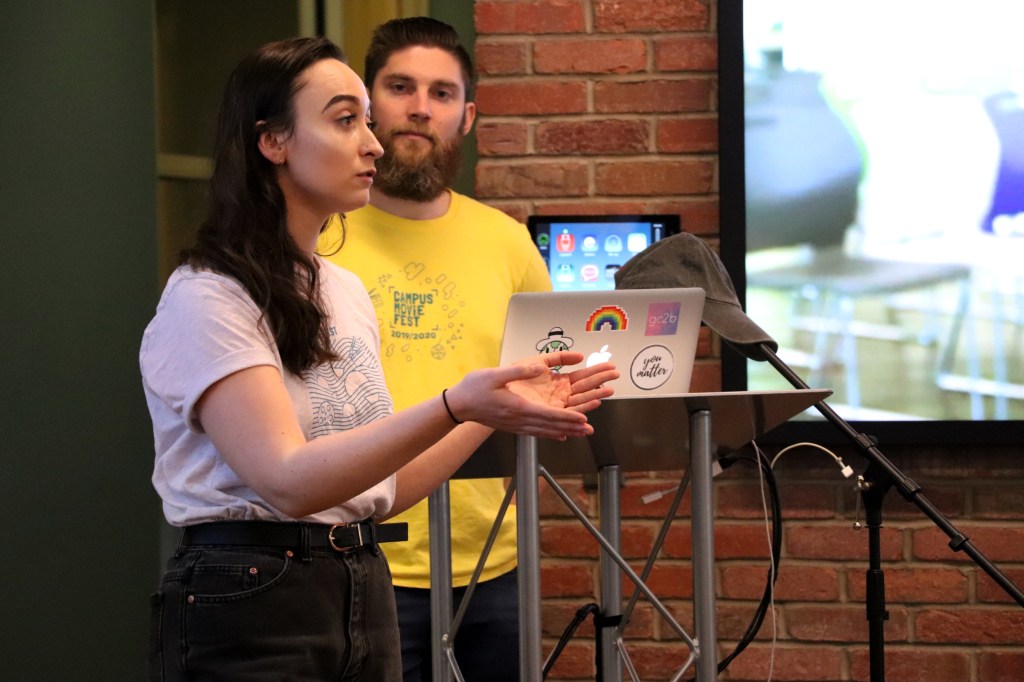
This week in Journalism 225, my task was to photograph an event at West Virginia University. Because I love video editing and videography, I found an event focusing on filmmaking, Campus Movie Fest, a program that reaches all over the country to enable aspiring filmmakers to make a five-minute short film within a week. Providing all the equipment, training and support, this event informed prospective students what this program entails and how to get involved in it.

West Virginia University Life Around Campus

In this project for journalism 225, I worked with taking photographs of West Virginia University’s campus life and worked on simple editing techniques, such as using levels and curves.

Design a site like this with WordPress.com
Get started